






Year-End Review for Real Estate Agents: The 7 Numbers to Pull Before You Plan 2027
It's the week after Thanksgiving. You open a blank document titled "2027 Goals," type "sell more homes," and close the laptop. Sound familiar?
You are trying to plan next year without knowing what this year actually did. No numbers means every goal is a guess, and guesses are easy to ignore by March.
This post walks through the seven numbers to pull before you plan 2027, where to find each one, and what to do with them once you have them.
What You'll Learn:
-
Why a year-end review comes before any 2027 goal
-
The seven numbers worth pulling this month
-
Where to find each number in your transaction records and bank statements
-
How to read the numbers without judging yourself
-
How to turn the numbers into a plan you can follow

Why Planning Without Numbers Feels So Hard
Most agents plan from a feeling. It was a slow year. It was a great year. I was busy all the time. Feelings are real, but they can't tell you which lead source paid your bills.
Pulling numbers feels hard because it means opening files you've been avoiding. The CRM is messy. Receipts live in three places. You might not love what you find.
Do it anyway. A plan built on real numbers takes less time to write and lasts longer than a plan built on a hunch. And nobody is grading this. Only you will see it.
What A Ready Year-End Review Looks Like
A ready review fits on one page. Seven numbers, each with a one-line note about what surprised you.
You don't need perfect data. A rough count beats no count. If your records are scattered, write "about" next to the number and keep moving. You can tighten it up in January.
Here are the seven numbers, grouped into five steps.
1. Closed Units And Closed Volume
Start with the two easiest numbers: how many transactions closed and your total sales volume. Pull them from your brokerage's transaction report or your own closing list.
Add one more line. How many were buyers and how many were sellers? That split tells you what kind of agent you were this year, which may be different from the kind you meant to be.
2. Closings By Lead Source
For every closing, write down where the client came from. Past client, referral, open house, social media, sign call, online lead, your sphere. One column, one word per row.
Then count. If six of your closings came from people who already knew you, that is your answer for next year. Put your time where the closings actually came from.
3. What You Spent And What Each Lead Cost
Add up everything you spent on marketing: ads, lead services, postcards, photography, software, signs. Divide that total by your revenue to get your spend as a percentage of what you earned. Then divide each channel's spend by the leads it produced to get your cost per lead.
Some channels cost no dollars and a lot of hours. Write the hours down too. A free channel that eats ten hours a week has a price.
4. Database Size And Contact Count
Count the people in your database. Then count how many you actually reached out to in the last twelve months with a call, a text, a note, or an email meant for them.
The gap between those two numbers is usually the biggest surprise of the review. Say you have 400 people in your phone and you spoke to 60 of them. That is 340 relationships waiting for you. If your contacts are scattered across apps and spreadsheets, Get Organized Now is a good place to start giving them one home.
5. Conversion From Lead To Closing
Take the leads you counted in step three and divide your closings by them. That is your conversion rate. Work it out for each lead source if you can.
Now you can see which sources bring volume, which bring quality, and which bring neither.
This is the number that makes the 2027 conversation easy. Cut the sources that cost money and convert at zero. Put more into the ones that turn into closings.
How To Make This Feel Manageable
Block ninety minutes. One cup of coffee, one spreadsheet, seven rows. If December is already packed, pull one number a day for a week instead.
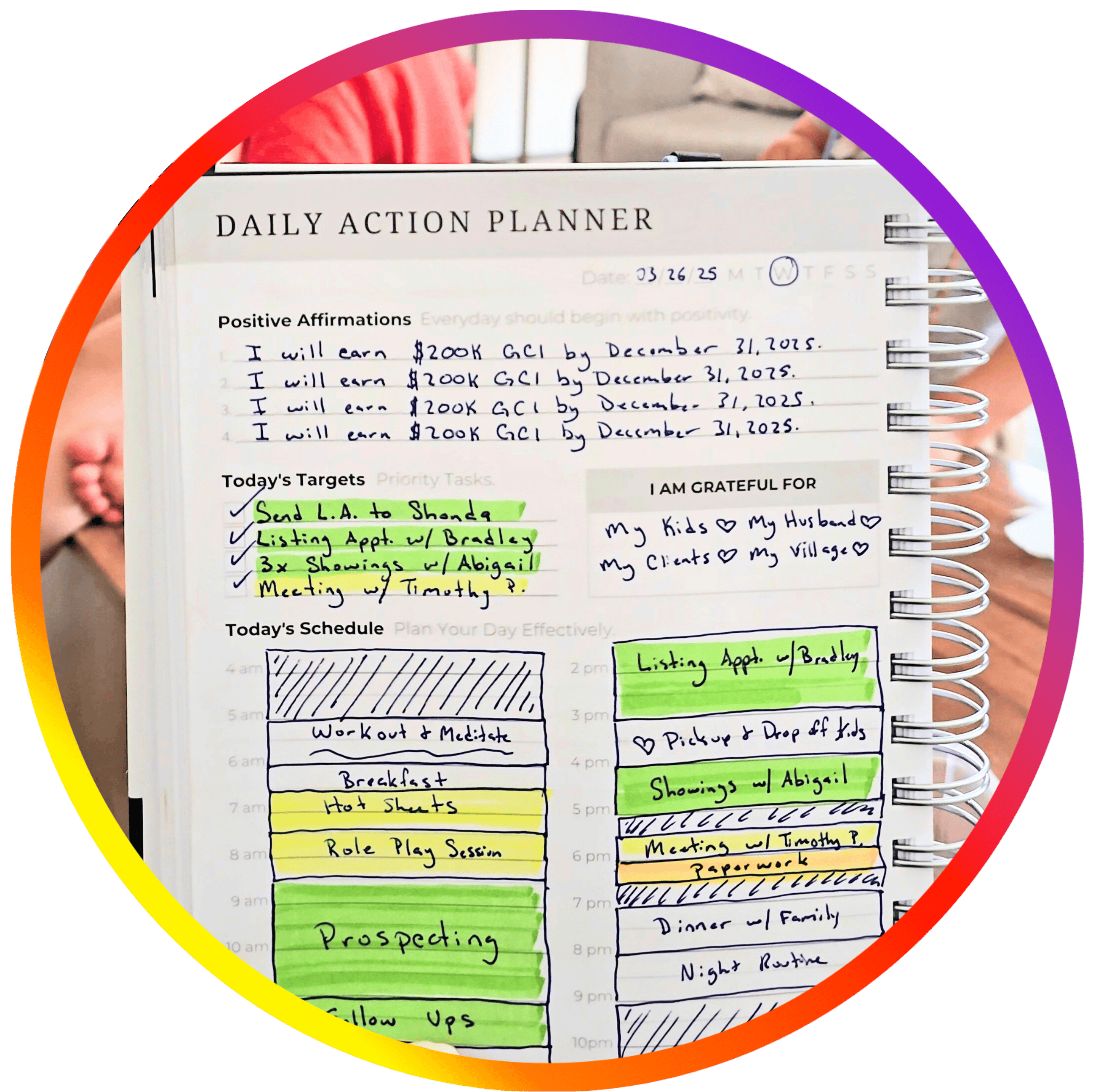
Once you have the numbers, put them where you will see them. The Real Estate Agent Planner Pro gives you a place to write your 2027 goals right next to the numbers you just pulled.
When you're ready to turn the review into a full plan, the Real Estate Agent Business Plan BluePrint [DIGITAL DOWNLOAD] gives you a structure to build it on.
What To Avoid
Don't skip the numbers you don't like. The low conversion rate and the unused database are exactly the numbers that tell you where 2027 can improve. Don't compare your numbers to another agent's. Different markets, different price points, different seasons of life. Your only comparison is you last year. And don't set 2027 goals before you finish the review. Goals written first and numbers pulled second usually end up ignored.
Don't wait for January. By then you're back in the daily rush and the review never happens.

If You Want A Clear 2027, Start With Your Closed Units
You don't have to do all seven today. You do have to start.
Every plan you will ever write sits on top of what already happened. The agents who plan well are the ones who looked at the real year first.
So open your transaction report this week and write down two numbers: closed units and closed volume. Everything else in this review builds from there.

ABOUT THE AUTHOR
Amanda Fazelani is the co-founder of Designed For Agents, where she shares her expertise in marketing, design, and business strategy for real estate agents. She is passionate about helping agents create stronger brands, market themselves more effectively, and build more organized, sustainable businesses with tools and education that make growth feel more achievable.
Explore Agent Favorites
Explore
Learn
About Us
Help
Stay in the loop